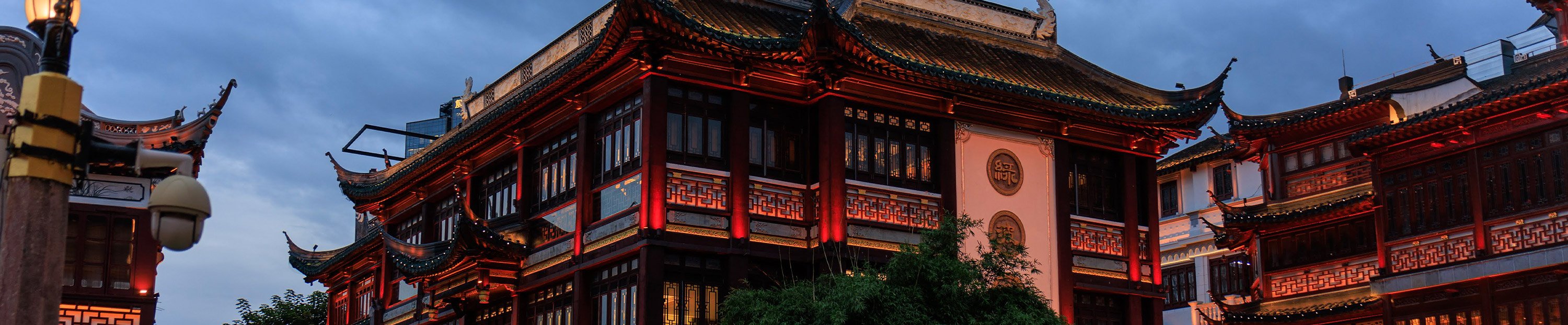
Shanghai – Where Old and New China Meet
Few cities stage a contrast as deliberate as Shanghai. Stand on the Bund and the two halves of the city face each other across the Huangpu River: to the west, the colonial-era stone facades of the old International Settlement; to the east, the glass towers of Pudong, a skyline that barely existed before the 1990s.
The Bund at Dusk
The Bund’s row of early twentieth-century banks and trading houses, built when Shanghai was the financial capital of East Asia, is at its most photogenic in the last hour before sunset, when the granite and limestone facades pick up warm light and the Pudong towers opposite begin to catch their own illumination. As night falls, the Oriental Pearl Tower and the Shanghai Tower light up in sequence, and the riverfront promenade fills with a mix of locals and visitors watching the transition.
The French Concession
A short distance inland, the former French Concession offers a completely different register: plane-tree-lined streets, art deco apartment blocks, and a scale of architecture that feels almost European. Early morning here, before the shops open, is quiet enough to photograph the streets largely empty, with light filtering through the tree canopy onto the pavement.
Getting There
Shanghai is served by two international airports, Pudong (PVG) and Hongqiao (SHA), both connected to the city centre by metro. The Maglev train from Pudong Airport to Longyang Road station is the fastest way into the city, though the metro is more practical for reaching the Bund and French Concession directly.
Interactive Expedition Map
Loading interactive terrain data...